
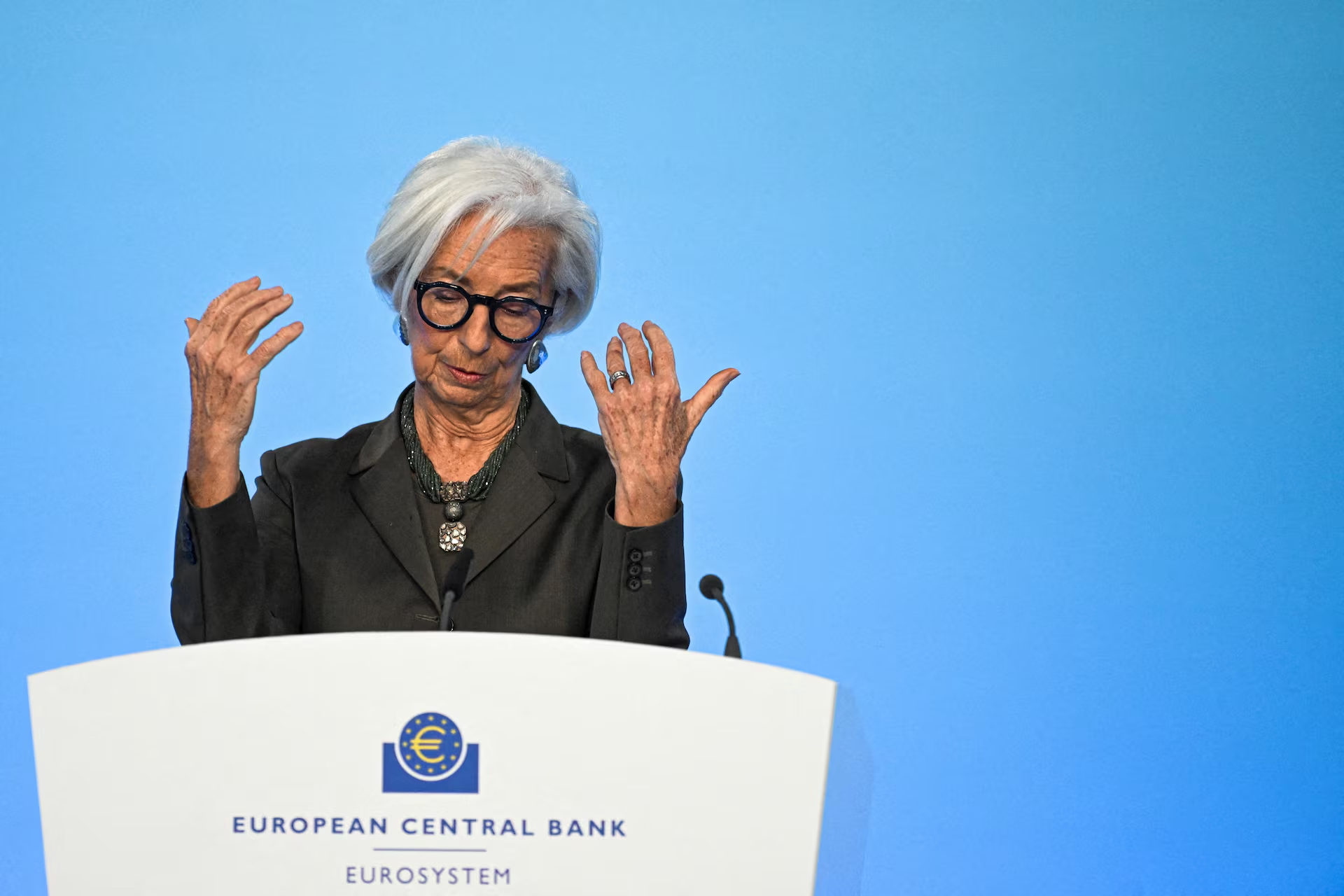
European Central Bank President Christine Lagarde is set to confront European Union leaders next week with a blunt, practical checklist aimed at reviving growth and boosting competitiveness across the bloc. The move marks an unusually direct effort by the ECB to push governments into accelerating reforms that have long been discussed but rarely delivered at speed.
For years, EU policymakers have debated everything from deeper economic integration to lighter, smarter regulation. Yet even major shocks — including U.S. tariff threats and the ongoing war on Europe’s eastern border — have failed to meaningfully quicken the pace of change. Frustration in Frankfurt has clearly been building.
The European Central Bank has repeatedly outlined what it believes needs to be done, often echoing the conclusions of former ECB chief and Italian prime minister Mario Draghi. But Lagarde acknowledged on Thursday that such advice is frequently brushed aside as familiar rhetoric. This time, she decided to raise the stakes.
Speaking after the ECB’s latest policy meeting, Lagarde said the bank will formally hand EU leaders a written checklist ahead of their February 12 gathering. “What we decided to do is to actually give our checklist to the leaders,” she told reporters. “This is our checklist of what we regard as very much likely to enhance growth, improve productivity, and really unleash the talent of Europe.”
The document will be circulated to all EU heads of state and government before they convene at an informal retreat focused on strengthening the single market in what officials describe as a new “geoeconomic” environment. According to Lagarde, the list will cover progress on a savings and investment union, the rollout of a digital euro, and the development of tokenised wholesale central bank money.
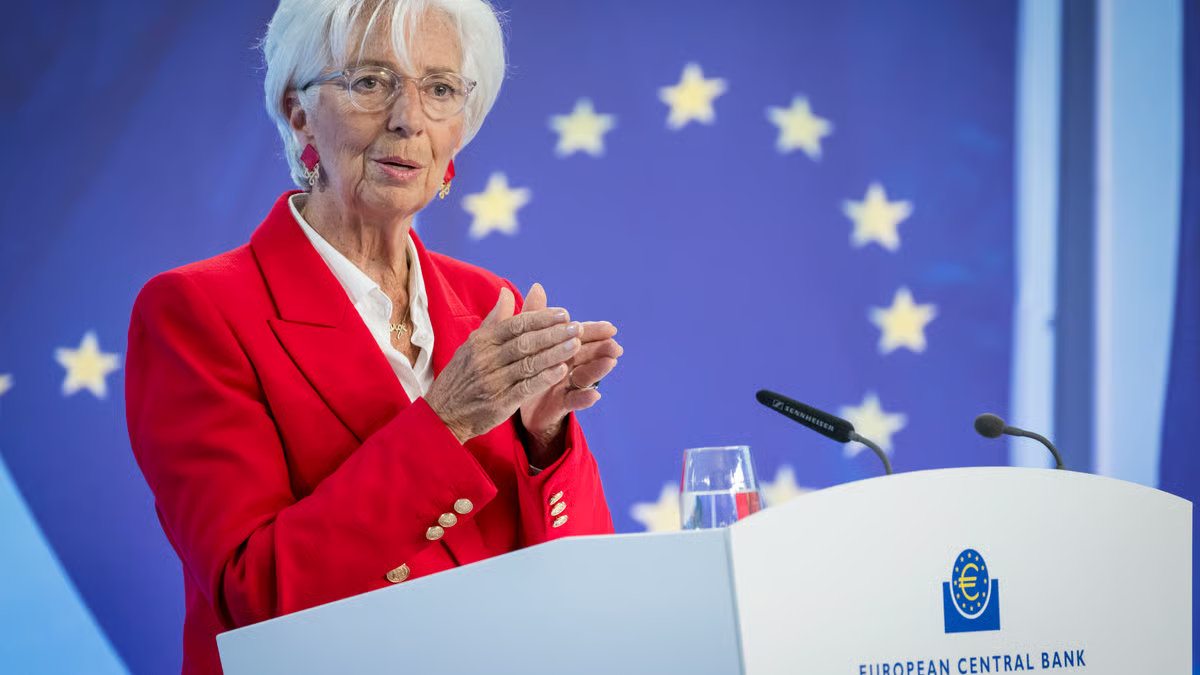
Beyond finance, the checklist also calls for deeper integration of the single market, stronger support for innovation, simpler and more consistent legislation, and a reinforced institutional framework at the heart of the EU.
Lagarde was clear-eyed about the scale of the challenge. “We cannot deliver it all,” she said. “But we strongly feel that significant reforms have to be either deepened or accelerated in order to deliver on what is the potential of Europe.”
With her latest intervention, Lagarde is signaling that patience is wearing thin — and that Europe’s reform debate may finally be moving from theory to action.

