

Table of Contents
Influenza, commonly known as the flu, is more than just a seasonal inconvenience. It is a contagious respiratory illness that can affect people of all ages and, in some cases, lead to serious complications. Understanding influenza flu symptoms early can help you take the right steps to protect yourself and others, seek timely care, and recover faster.
This guide explains the symptoms in clear, simple language—so you know exactly what to watch for.
What Is Influenza and Why Symptoms Matter
Influenza is caused by flu viruses that spread easily through coughs, sneezes, talking, or touching contaminated surfaces. Symptoms often appear suddenly and can feel intense, especially in the first few days.
Recognizing influenza flu symptoms early is crucial because:

It helps prevent spreading the virus
It allows early medical intervention if needed
It reduces the risk of complications in vulnerable individuals
Early Warning Signs of Influenza
Unlike the common cold, influenza symptoms usually start abruptly. You may feel fine one moment and extremely unwell the next.
Common Early Symptoms Include:
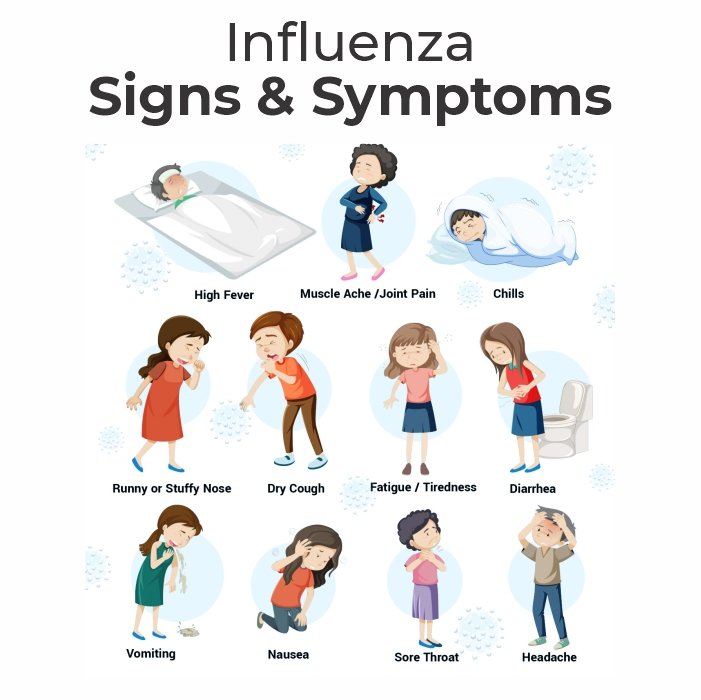
Sudden fever or chills
Headache and eye pain
Extreme tiredness or weakness
Muscle and joint aches
These early influenza flu symptoms often signal that the virus is actively affecting your body.
Most Common Influenza Flu Symptoms
Once influenza sets in, symptoms can affect both your respiratory system and your entire body.
Fever and Chills
A high fever (often 100°F–104°F) is one of the hallmark influenza flu symptoms, especially in children. Chills may accompany the fever, making you feel cold even in warm surroundings.
Cough and Sore Throat
A dry, persistent cough is common and may worsen at night. A sore or scratchy throat often appears early and can linger for days.
Runny or Stuffy Nose
While more common in colds, nasal congestion can still occur with influenza, particularly in children.
Body Aches and Muscle Pain
Deep muscle pain and joint stiffness are classic influenza flu symptoms and often make daily movement uncomfortable.
Severe Fatigue
Flu-related exhaustion is more intense than normal tiredness. Many people feel drained even after adequate rest.
Digestive Symptoms You Shouldn’t Ignore
While influenza mainly affects the respiratory system, digestive symptoms can also appear—especially in children.
These may include:
Nausea
Vomiting
Diarrhea
Though less common in adults, these influenza flu symptoms can lead to dehydration if not managed properly.
Influenza Flu Symptoms in Children vs Adults
Symptoms can vary depending on age and overall health.
In Children
Higher fevers
Ear pain
Vomiting or diarrhea
Increased irritability or lethargy
In Adults
Severe fatigue
Body aches
Headaches
Chest discomfort
Children often show symptoms more dramatically, while adults may underestimate how serious their influenza flu symptoms are.
How Long Do Influenza Symptoms Last?
Most flu symptoms last about 5–7 days, but full recovery can take longer.
Typical Timeline:
Days 1–3: Sudden onset, severe symptoms
Days 4–7: Fever and aches begin to ease
After 1 week: Fatigue and cough may persist
If influenza flu symptoms worsen or last longer than 10 days, medical advice is recommended.
When Influenza Symptoms Become Serious
Some symptoms signal complications and should not be ignored.
Seek Medical Help If You Notice:
Difficulty breathing or chest pain
Persistent high fever
Confusion or dizziness
Blue lips or face
Severe weakness
High-risk individuals—such as older adults, pregnant women, and those with chronic illnesses—should be especially cautious about influenza flu symptoms.
Influenza vs Common Cold: Key Differences
| Feature | Influenza | Common Cold |
|---|---|---|
| Onset | Sudden | Gradual |
| Fever | High | Rare |
| Body Aches | Severe | Mild |
| Fatigue | Extreme | Mild |
| Cough | Common | Sometimes |
Understanding these differences helps you correctly identify influenza flu symptoms and respond appropriately.
Final Thoughts: Listen to Your Body
Influenza can affect anyone, but early awareness makes a big difference. By recognizing influenza flu symptoms, you can rest sooner, reduce transmission, and seek help when needed.
Never ignore sudden fever, extreme fatigue, or body aches—your body is signaling that something isn’t right. Staying informed is one of the best defenses against the flu.

